Books in Belfast
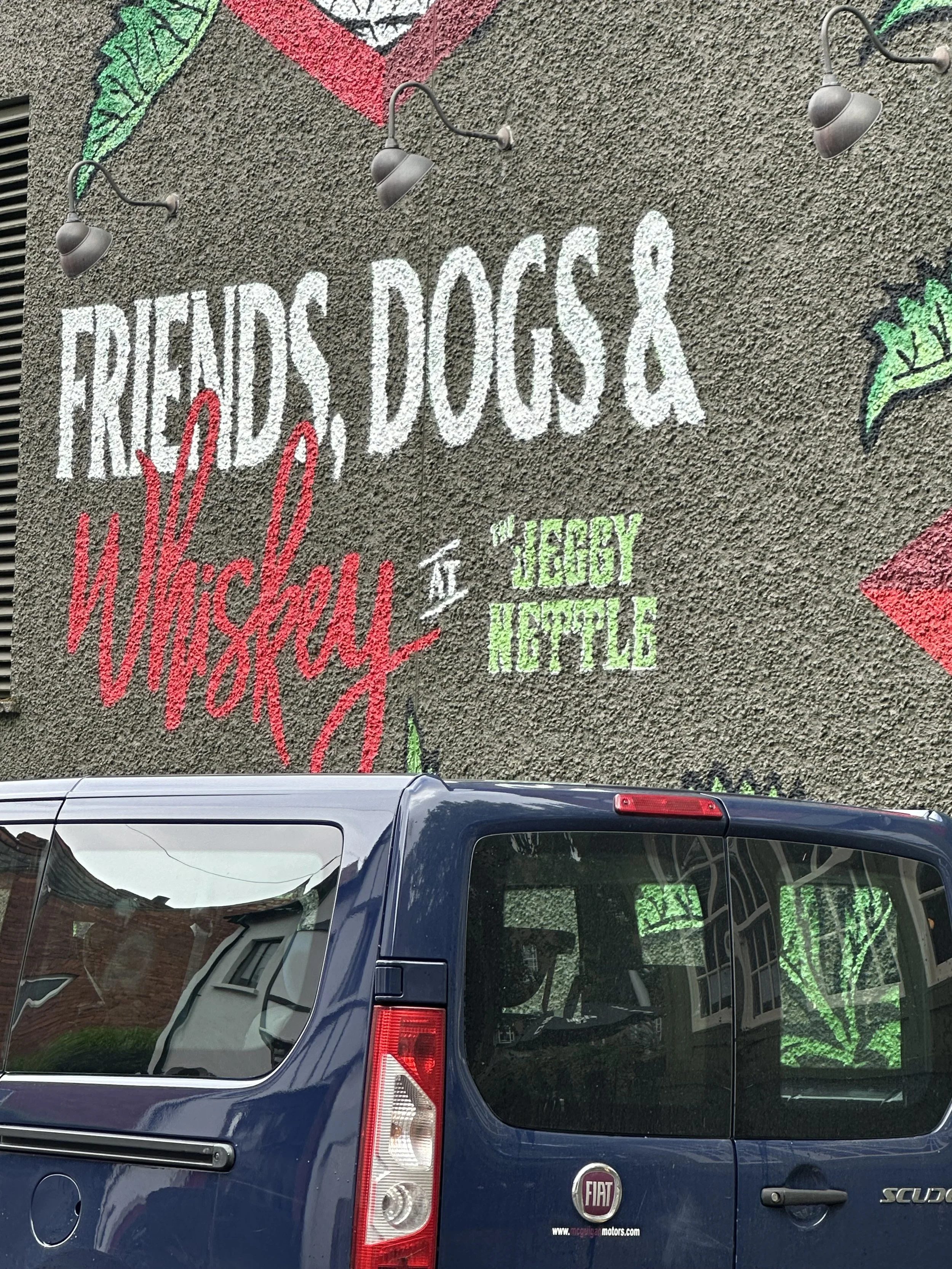
In Belfast, I met readers. They were crowded between the stacks in Keats and Chapman, sifting through weathered spines of 70s paperbacks. They were chatting in long lines at the Belfast Book Festival, waiting to hear Anne Enright talk about her novels and Irish family. They were at the Jeggy Nettle, a pub near Queens College, reading over an afternoon pint, a terrier at their feet.
In the Belfast City Airport, at the car rental kiosk, the guy behind the counter asked why I was there. I told him I’d brought a group of college students from the states for a creative writing class.
He wanted the titles of my novels and wrote them down. He then asked if I’d ever read Cormac McCarthy’s Blood Meridian. We talked about the book long after I'd signed the rental agreement and been handed the keys.
One Sunday, I hiked up Cave Hill, a mountain bordering Belfast, where I was promised panoramic views of the city and the harbor. Instead, I walked into clouds. A man named Declan with a brown labrador asked if I knew the way back.
“Kind of,” I said. I had parked my car at Belfast Castle, and only kind of knew the way down.
“I’ll walk you to your path.”
We talked about Joyce and Flann O’Brien on the way.
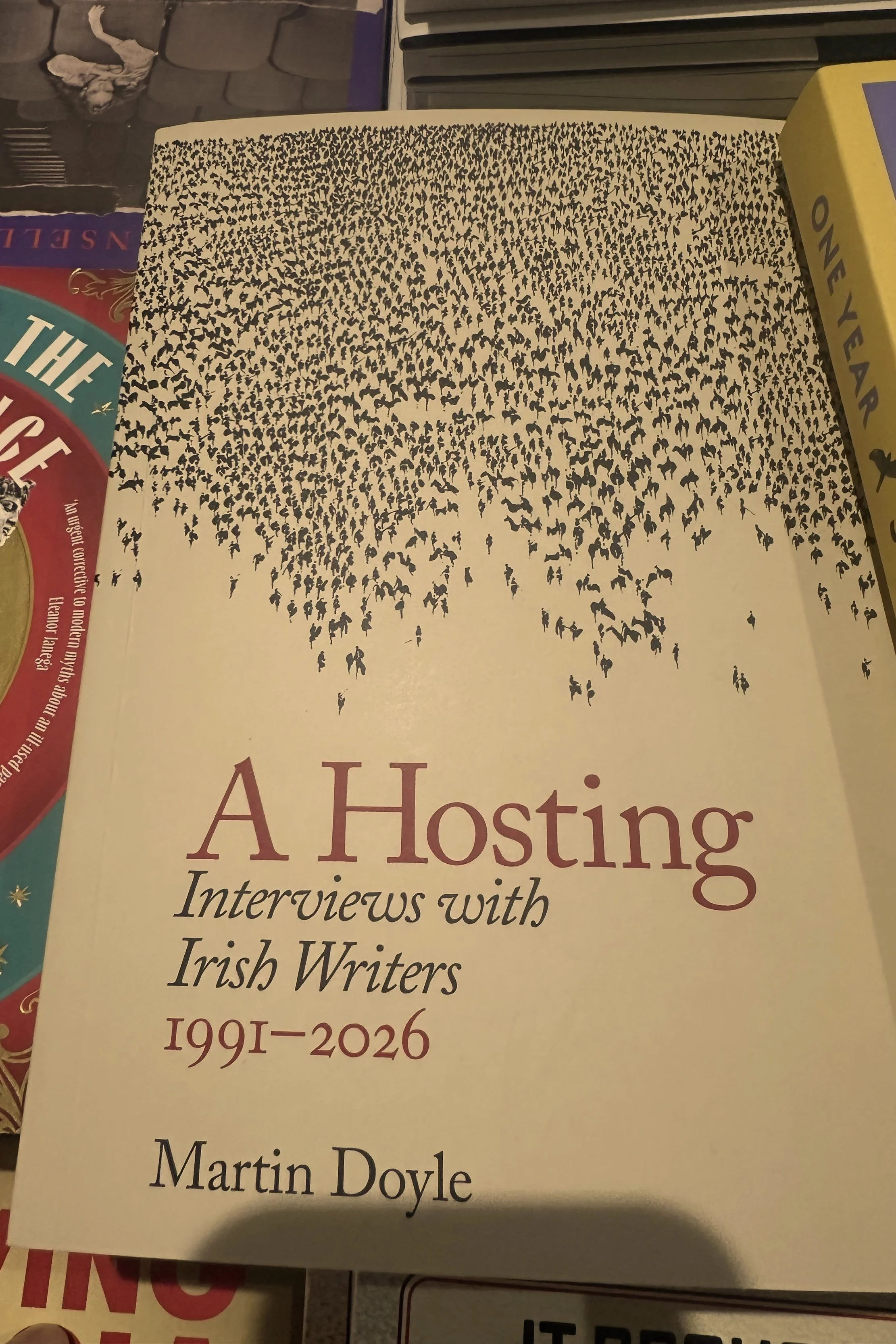
Irish Writers Talking Writing
My co-teacher pointed out that in America many of the readers you meet are also writers or trying to be writers, whereas in Ireland people read because that is what people do. They still have their phones out at bus stops and cafes, but you will see more people waiting with a paperback than you do back in the States.
I’m not entirely sure why and can’t begin to explain why the Irish are different from us in this way. All I can do is notice. When I told people I was a writer in Ireland, no one made jokes about it or looked at me askance, as if I was doing something both unproductive and unpatriotic. There were no Irish equivalents, as far as I could tell, to the Atlantic-type articles on the “End of Reading.”
Books were just part of one’s daily existence.
But I can explain some of it. Money, for instance. In the Republic, the government funds the arts like they matter. In an article in The Guardian (UK), Kate McCusker pointed out that Ireland has a robust arts council, popular literary magazines like The Stinging Fly, and tax exceptions for artists. The North may lack this, but it still seemed better funded than arts in the United States, where the National Endowment for the Arts was crippled by the Trump Administration. In some ways, you get the culture you pay for.
This is the point in the post where I make some big proclamation about the decline of American cultural values or the dystopian rise of generative AI and how we are dooming our children to be very, very dumb. That might be true. I don’t know. I don’t predict the future. I gave that up after thinking, for a brief moment, that the Internet might make us a more peaceful society. I can’t fathom where we’re headed, and those making an argument that a book-less future is inevitable, don’t know either. If they did, they wouldn’t have to sell us so hard on it.
But I do know we lose something when we turn to our phones and the robots running them for connection, instead of looking toward the hard-wrought words of an author trying to empathize with us. We’re losing something innate to what it means to be human and we all know it. I’m just not sure enough of us, outside of Ireland, care.